
 PJ Hanley
“And the LORD spoke to Moses, saying, But as for you, speak to the sons of Israel, saying, ‘You shall surely observe My Sabbaths; for this is a sign between Me and you throughout your generations, that you may know that I am the LORD who sanctifies you.’” Ex 31:13
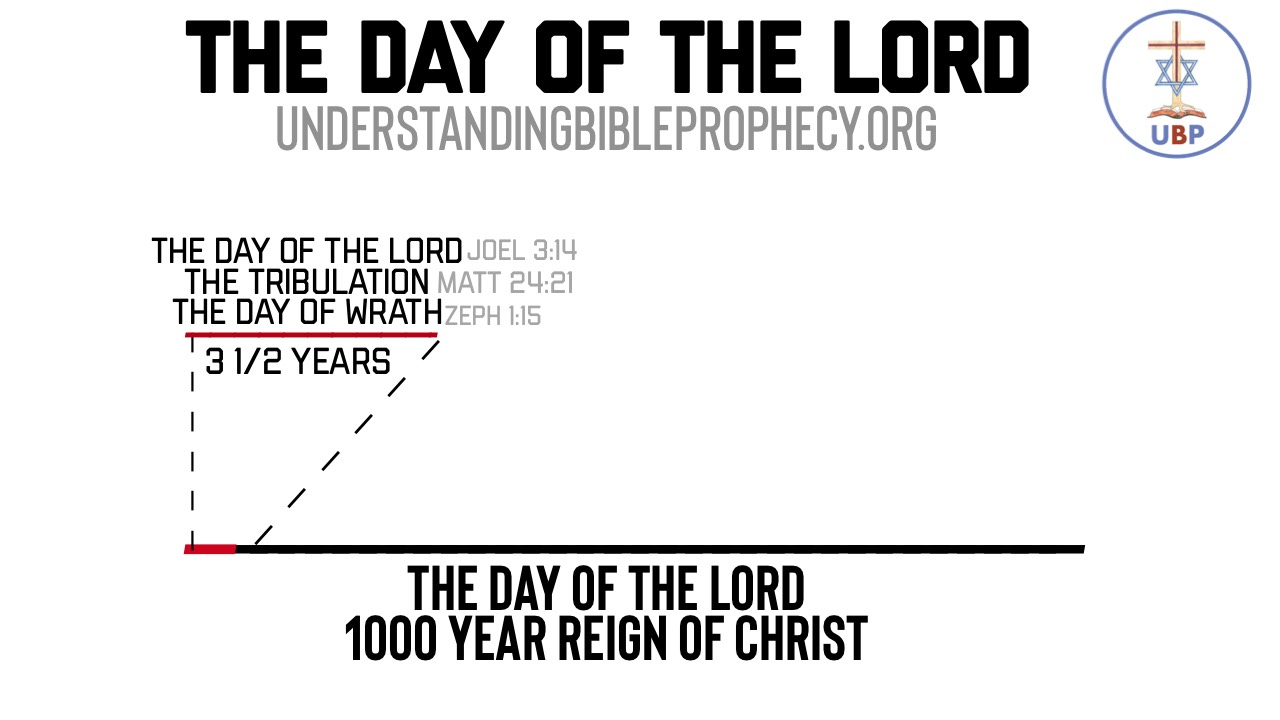
God gave the Sabbath to Israel as a sign. The seventh day was to be set apart as holy, a day of rest. The seventh month was also holy and the seventh year was to be set apart by the Israelites as a year of rest for the land. In addition, when seven of these Shemitah periods had accumulated, the Israelites were to proclaim the year of Jubilee on the fiftieth year. The Jubilee was a special time of deliverance and freedom for the people. It was a time of celebration – a special time to remember God’s goodness and to show kindness to others. It was a rehearsal for the Day of the Lord, the Day of Rest, just like the weekly Sabbath, the monthly Sabbath, and the yearly Sabbath. They each proclaim the Day of the Lord, the Kingdom of Messiah, the Unique Day of God’s favor and rest, which is the Seventh Millennium. This was the understanding of the Jewish prophets and it has been taught down through the ages by the Jewish rabbis and also by the writers of the New Testament. Consider the following quotes from the Babylonian Talmud.
“The Tanna rebe Eliyyahu teaches: ‘The world is to exist six thousand years. In the first two thousand there was desolation; two thousand years the Torah flourished; and the next two thousand years is the Messianic era…’
“R. Kattina said: ‘Six thousand years shall the world exist, and one (thousand, the seventh), it shall be desolate, as it is written, And the Lord alone shall be exalted in that day. Abaye said: it will be desolate two (thousand), as it is said, After two days will he will revive us: in the third day, he will raise us up, and we shall live in his sight.’”
“It has been taught in accordance with R. Kattina: ‘Just as the seventh year is one year of release in seven, so is the world: one thousand years out of seven shall be fallow, as it is written, And the Lord alone shall be exalted in that day, and it is further said, a Psalm and song for the Sabbath day, meaning the day is altogether Sabbath – and it is also said, For a thousand years in thy sight are but as yesterday when it is past.’”
Where did the Jewish rabbis get this understanding? It appears they got it from Scripture, from the writings of Moses and others. Consider the following:
“And the LORD God commanded the man, saying, ‘From any tree of the garden you may eat freely; but from the tree of the knowledge of good and evil you shall not eat, for in the day that you eat from it you shall surely die.’” Gen 2:16-17
In this passage of Genesis, the rabbis understood Moses (Moses wrote Genesis) to mean that a day was 1000 years, and that Adam died on the day that he ate from the tree of the knowledge of good and evil just like God had said. Adam died when he was 930 years old and never reached 1000 years or the end of the first day. No one else reached it either, including Methuselah who came the closest. Another confirmation that Moses taught this is in Psalm 90, which of course was also written by Moses.
“For a thousand years in Thy sight are like yesterday when it passes by, or as a watch in the night.” Psalms 90:4
Another passage of Scripture that led the rabbis to the same conclusion that a day (prophetically speaking) was one thousand years is Malachi Chapter 4.
“But for you who fear My name the sun of righteousness will rise with healing in its wings; and you will go forth and skip about like calves from the stall.” Mal 4:2
They understood this verse to be a reference to the Messiah coming on day four or the fourth millennium. Since the sun was created on the fourth day they interpreted “the sun of righteousness” to be a reference to the Messiah coming on the fourth millennium bringing deliverance to Israel. Were they right? Yes! Messiah did come at the very end of the fourth day or millennium. The wings referred to were the “Tzi-Tzit” or tassels of his garments (Mt 9:20).
“Come, let us return to the LORD. For He has torn us, but He will heal us; He has wounded us, but He will bandage us. He will revive us after two days; He will raise us up on the third day that we may live before Him.” Hosea 6:1
The rabbis understood this passage to refer to the Messianic era. The Jewish people would be wounded for two days, but on the third day of Messiah, they would be healed. Two thousand years they would suffer, and on the third millennium, the Kingdom would come. Jesus Himself seems to have verified this by the following statements:
“And He said to them, ‘Go and tell that fox, ‘Behold, I cast out demons and perform cures today and tomorrow, and the third day I reach My goal.’ Nevertheless I must journey on today and tomorrow and the next day; for it cannot be that a prophet should perish outside of Jerusalem.” Luke 13:32
Careful examination of the text tells us that Jesus did not reach His goal on the third day after this statement. He was not referring to twenty-four hour periods at all, but rather, the “Third Day” or Third Millennium. Jesus says that He will perform cures and cast out demons for two millennia and then He will reach His goal – the Kingdom of God. One would be hard pressed to interpret this passage any other way.
“Jesus answered and said to them, “Destroy this temple, and in three days I will raise it up. The Jews therefore said, ‘It took forty-six years to build this temple, and will You raise it up in three days?’ But He was speaking of the temple of His body.” John 2:19-21
The Hebrew prophets often used common, well-known idioms or figures of speech in their prophetic writings. Also, there are many examples of prophecies that have more than one meaning. Jesus, being a Jew, and of course, the premier Jewish Prophet, was no exception. The rabbis understood this way of speaking and always studied the Scriptures for the deeper meaning. John tells us here that Jesus was speaking of the temple of His body. This is one meaning. However, the second meaning is that Jesus was stating that the Temple in Jerusalem would be destroyed and would lay desolate for two days (two millennia) and that He would rebuild it on the third day (third millennium). This understanding of one day being a thousand years and the Day of the Lord being a thousand years long is also confirmed by other New Testament writers.
“But do not let this one fact escape your notice, beloved, that with the Lord one day is as a thousand years, and a thousand years as one day (or day one).” 2 Pet 3:8
In this passage, Peter emphatically states that the Day of the Lord is one thousand years long and that, with reference to the prophetic Scriptures regarding the end of the age, the Lord is counting days in thousands of years. Many conclude that Peter is here saying that God does not keep track of time and does not care how long it takes to do something. However, no first century Jew would ever say such a thing. God had taught them that the right day and the right time for each event was of the utmost importance. Each feast day had to be celebrated and each sacrifice had to be offered at exactly the right time. Jesus Himself, in fulfilling over three hundred Messianic prophecies, had perfect timing in everything. Peter would never have made such a statement. What he is saying is merely reiterating what was already prophesied by the Hebrew prophets and interpreted by the rabbis including Messiah Himself. With regard to the coming of the Day of God and the interpretation of prophetic Scripture, we must not let this “fact” (implied in the Greek) escape our notice that one day with the Lord is equal to one thousand years. John the Apostle, in the last book of the Bible, again confirms that the Day of the Lord or the Kingdom of Messiah is to last for one thousand years (Rev 20:1-6). Also in John’s gospel, we find many references to the Seventh Day or the Day of the Lord.
“No one can come to Me, unless the Father who sent Me draws him; and I will raise him up on the last day.” John 6:44
“He who rejects Me, and does not receive My sayings, has one who judges him; the word I spoke is what will judge him at the last day.” John 12:48
“Martha said to Him, ‘I know that he will rise again in the resurrection on the last day.’” John 11:24
The “Last Day” was not a reference to the last twenty-four hour period at the end of the age. It is clear from these passages that it was the Day when the righteous would be resurrected and the wicked judged. No student of eschatology would suggest that these events take place within a twenty-four hour period. Neither can we suggest that it is a reference to an unknown or insignificant amount of time. The theme of the “Last Day” was a common one to the first century Jews as evidenced by Martha’s statement to Jesus and Jesus’ repeated mention of the “Last Day.” There was apparently no need to explain it since everybody was expected to understand. The “Last Day” was of course “the Day of the Lord” – the Seventh Day – the Kingdom of Messiah – the Millennial Reign.
The writer of Hebrews, although not mentioning any specific time period, echoes the familiar theme of the Day of God or the Seventh Millennium Sabbath Rest in the following passage:
“For indeed we have had good news preached to us, just as they also; but the word they heard did not profit them, because it was not united by faith in those who heard. For we who have believed enter that rest, just as He has said, ‘As I swore in My wrath, they shall not enter My rest,’ although His works were finished from the foundation of the world. For He has thus said somewhere concerning the seventh day, ‘And God rested on the seventh day from all His works’; and again in this passage, ‘They shall not enter My rest.’ Since therefore it remains for some to enter it, and those who formerly had good news preached to them failed to enter because of disobedience, He again fixes a certain day, ‘Today,’ saying through David after so long a time just as has been said before, ‘Today if you hear His voice, do not harden your hearts.’ For if Joshua had given them rest, He would not have spoken of another day after that. There remains therefore a Sabbath rest for the people of God. For the one who has entered His rest has himself also rested from his works, as God did from His.” Heb 4:2-10
Excerpt from “The 7 Lost Keys of End-Time Prophecy: Unlocking the mysteries and dispelling the myths surrounding the Coming of Christ” by PJ Hanley
To purchase this book, click the button below: